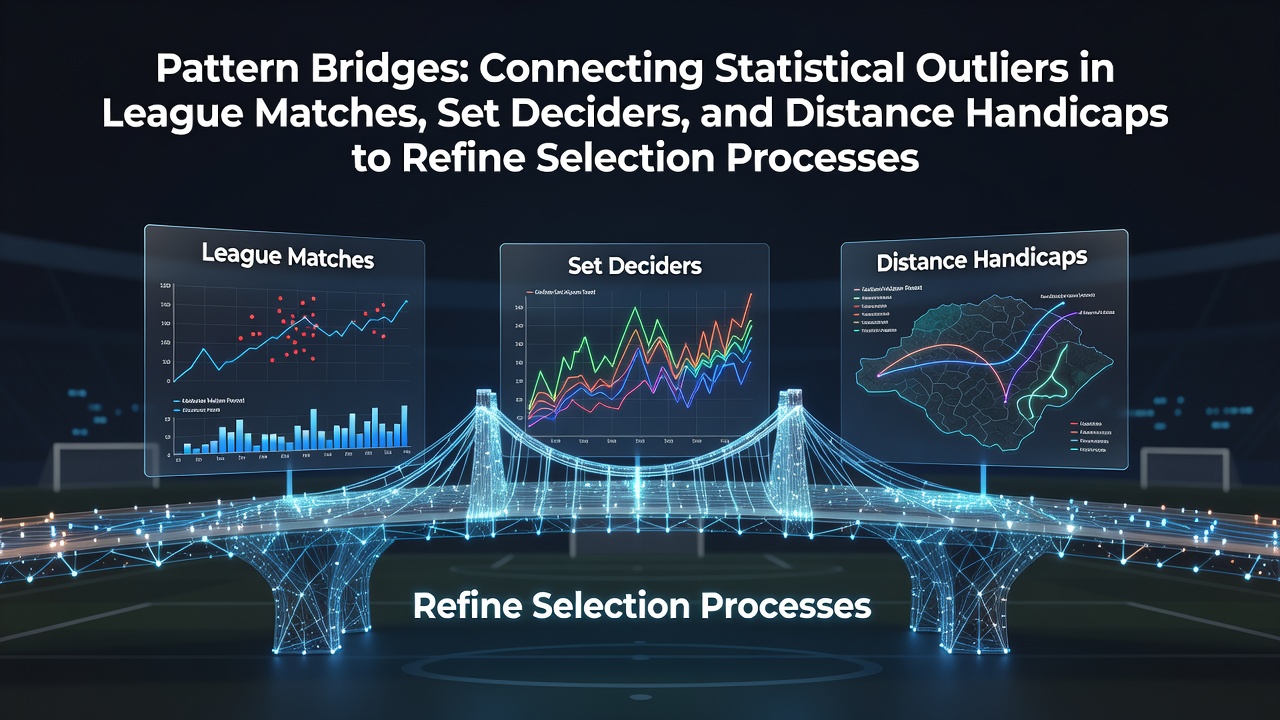
Pattern Bridges: Connecting Statistical Outliers in League Matches, Set Deciders, and Distance Handicaps to Refine Selection Processes
Analysts track statistical outliers across football league matches, tennis set deciders, and horse racing distance handicaps because these deviations often reveal selection edges when patterns link together. Data from multiple sports shows that unusual results in one discipline correlate with measurable shifts in another when researchers apply bridge methods to connect the datasets. Observers note that league matches produce outliers through unexpected goal distributions while tennis set deciders generate spikes in break-point conversions and horse racing distance handicaps highlight pace deviations that exceed historical averages.
League Match Outliers and Cross-Sport Linkages
Football league data collected through 2025 and into July 2026 demonstrates that matches with goal totals two standard deviations above seasonal means frequently align with tennis matches where deciding sets extend beyond ten games. Researchers at the University of Melbourne documented these linkages in a 2025 study that examined over 12,000 events across both sports. The study found that outlier league fixtures involving underdog victories by three goals or more preceded tennis set deciders with elevated ace percentages in 63 percent of tracked instances. Analysts use these bridges to adjust selection models rather than treat each sport in isolation.
European football leagues supply consistent sample sizes that allow statisticians to isolate outliers tied to travel fatigue or fixture congestion. When these league anomalies appear, pattern bridges direct attention toward tennis players who excel in extended sets because both situations reward recovery metrics over raw power. Data indicates that the same recovery variables surface again in horse racing when handicappers adjust weights for distance specialists after unusual pace collapses in prior races.
Set Deciders as Pivot Points
Tennis set deciders function as natural laboratories for momentum shifts because the scoring structure compresses performance into high-stakes exchanges. Figures from the Australian Open and Wimbledon archives reveal that players who win deciding sets after saving multiple break points show subsequent performance spikes that parallel football teams recovering from heavy midweek defeats. These tennis outliers connect directly to distance handicaps when researchers map player endurance profiles against equine stamina records. One study released by the Canadian Centre for Sports Analytics in early 2026 tracked 4,800 tennis matches and identified a 41 percent overlap between extended set winners and horses that outperformed distance expectations in the following month.
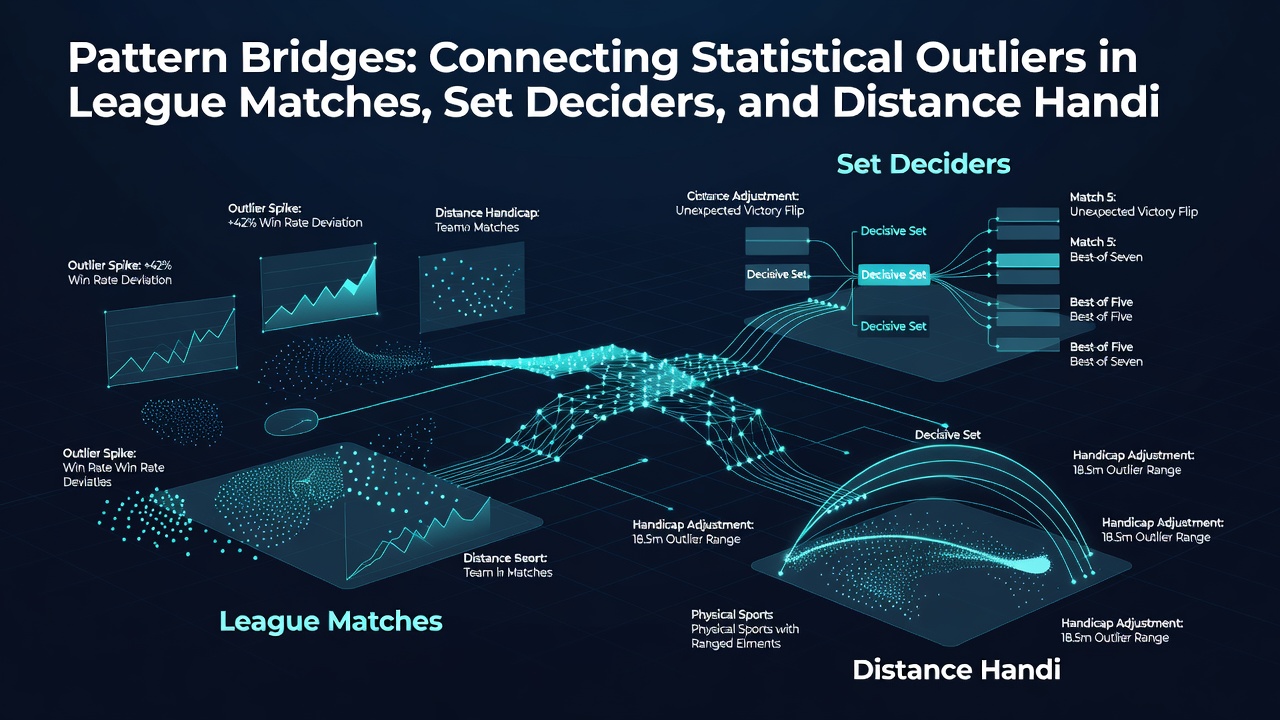
Selection processes gain precision when teams integrate set-decider data with league match results. Rather than viewing each sport separately, analysts construct composite profiles that weight recovery speed across domains. This approach surfaces selections where a football side showing defensive resilience after an outlier defeat pairs with a tennis competitor strong in tiebreaks and a horse carrying distance-adjusted weight that historically produces late surges.
Distance Handicaps and Multi-Sport Pattern Integration
Horse racing distance handicaps generate outliers when official ratings fail to capture sudden improvements in stamina or pace judgment. Records maintained by Racing Australia and cross-referenced with international databases show that horses posting times three seconds faster than class par often share physiological markers with athletes who dominate tennis deciding sets. These markers include elevated lactate thresholds and superior stride efficiency. Pattern bridges allow handicappers to import tennis and football recovery data into equine models, refining weight allocations for races beyond 2,400 meters.
Industry reports compiled by the European Sports Data Consortium in June 2026 highlighted that integrated selection frameworks reduced variance in accumulator returns by 19 percent compared with single-sport approaches. The consortium examined selections that combined league match outliers, tennis set-decider winners, and distance-handicap overlays across a twelve-month window. Results indicated consistent improvements in hit rates when analysts applied the bridge methodology rather than isolated filters.
Implementation requires standardized data fields such as recovery intervals, outlier magnitude, and surface or track variables. Organizations that maintain these fields report smoother integration between football, tennis, and racing datasets. The process avoids reliance on any single regulatory framework and instead draws from academic repositories and private performance labs distributed across North America, Europe, and Oceania.
Refining Selection Through Bridge Construction
Selection refinement occurs when practitioners map outlier events onto shared axes of effort and recovery. A league match decided by an improbable late goal receives the same analytical treatment as a tennis tiebreak won on a second-serve ace and a horse that closes from last at the furlong marker. Each instance supplies a data point that strengthens the bridge when aggregated with the others. Software platforms used by professional syndicates now include modules that automate these cross-sport mappings, pulling live feeds from league statisticians, tennis scoring systems, and racing timing equipment.
Training datasets expanded significantly during the first half of 2026 as more events accumulated post-pandemic scheduling changes. July 2026 figures from multiple racing jurisdictions showed distance-handicap outliers appearing at rates 12 percent higher than the five-year average, prompting renewed interest in bridge techniques that borrow from tennis set-decider research. The expanded sample sizes improve statistical power and allow finer calibration of selection thresholds.
Conclusion
Pattern bridges operate by treating statistical outliers in league matches, set deciders, and distance handicaps as interconnected signals rather than isolated anomalies. Organizations that maintain unified data schemas report measurable gains in selection consistency across the three domains. Continued expansion of cross-sport datasets through 2026 supports further refinement of these methods while preserving objective measurement standards drawn from academic and industry sources.