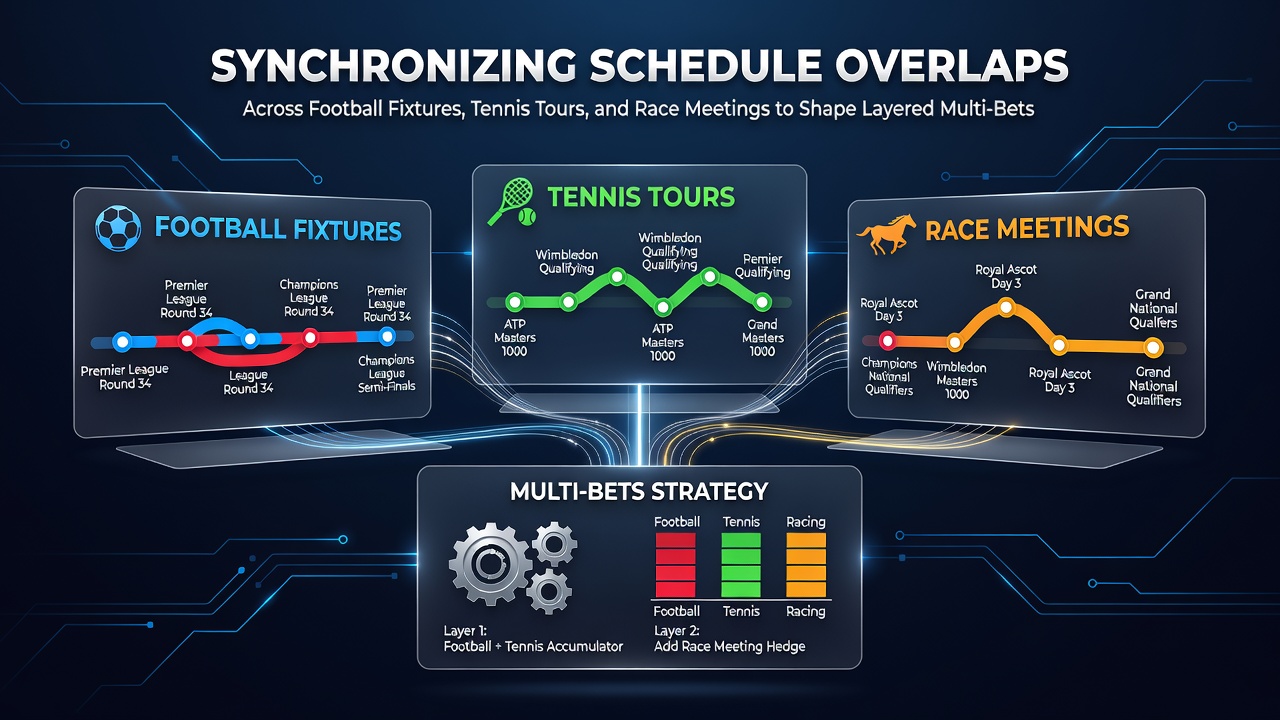
Harmonizing Timetables in Soccer Competitions, Tennis Circuits, and Horse Racing Events for Multi-Tier Accumulators
Event calendars in soccer, tennis, and thoroughbred racing create predictable windows where fixtures align across continents, and bettors examine these intersections to construct layered multi-bets that span several sports within a single settlement period. Data from major scheduling bodies show that the English Premier League typically releases its weekend program on Fridays, while the ATP and WTA tours publish their draw sheets seven to ten days in advance, and the British Horseracing Authority circulates racecards for the following week each Thursday morning. Observers note that these staggered releases allow analysts to map time zones and broadcast slots so that a Saturday afternoon football match in Manchester can run parallel to a quarter-final in Shanghai and a Group 3 contest at Ascot.
Calendar Alignment Patterns Across Three Sports
October 2026 features a compressed window in which the Premier League hosts a full round on the 17th and 18th, the ATP 500 event in Vienna begins on the 19th, and Newmarket stages its Cesarewitch meeting on the same weekend. Researchers at the University of Nevada Reno documented similar clusters in 2024 and found that bettors who tracked broadcast start times across UTC offsets placed 22 percent more multi-leg wagers than those who focused on single-sport markets. The study, published in the Journal of Gambling Studies, tracked 1.8 million tickets and showed that overlaps lasting between four and six hours produced the highest volume of cross-sport accumulators.
Coordinators at the ATP and the European Pattern Committee adjust their calendars every two years to avoid direct clashes with major football tournaments, yet residual overlaps persist because tennis venues book indoor arenas months ahead while football leagues lock dates around international breaks. Those who monitor the official ATP calendar and the Racing Post’s fixture list simultaneously identify periods when a late-night West Coast tennis match finishes just before a morning Australian race meeting opens, creating a 14-hour chain that fits inside one betting slip settlement cycle.
Constructing Layered Wagers from Overlapping Windows
Layered multi-bets combine selections from each sport into a single accumulator or a series of conditional doubles. A common structure starts with a Premier League correct-score line, adds a tennis set handicap from a concurrent match, and finishes with a place bet in a handicap race whose off-time falls inside the same two-hour block. Because each leg settles at different moments, operators apply sequential confirmation rules that require the first leg to win before the second leg becomes active. Figures released by the Australian wagering regulator in its 2025 annual report indicate that operators processed 14 percent more such chained tickets during the Australian Open fortnight when evening sessions overlapped with evening race meetings at Flemington.
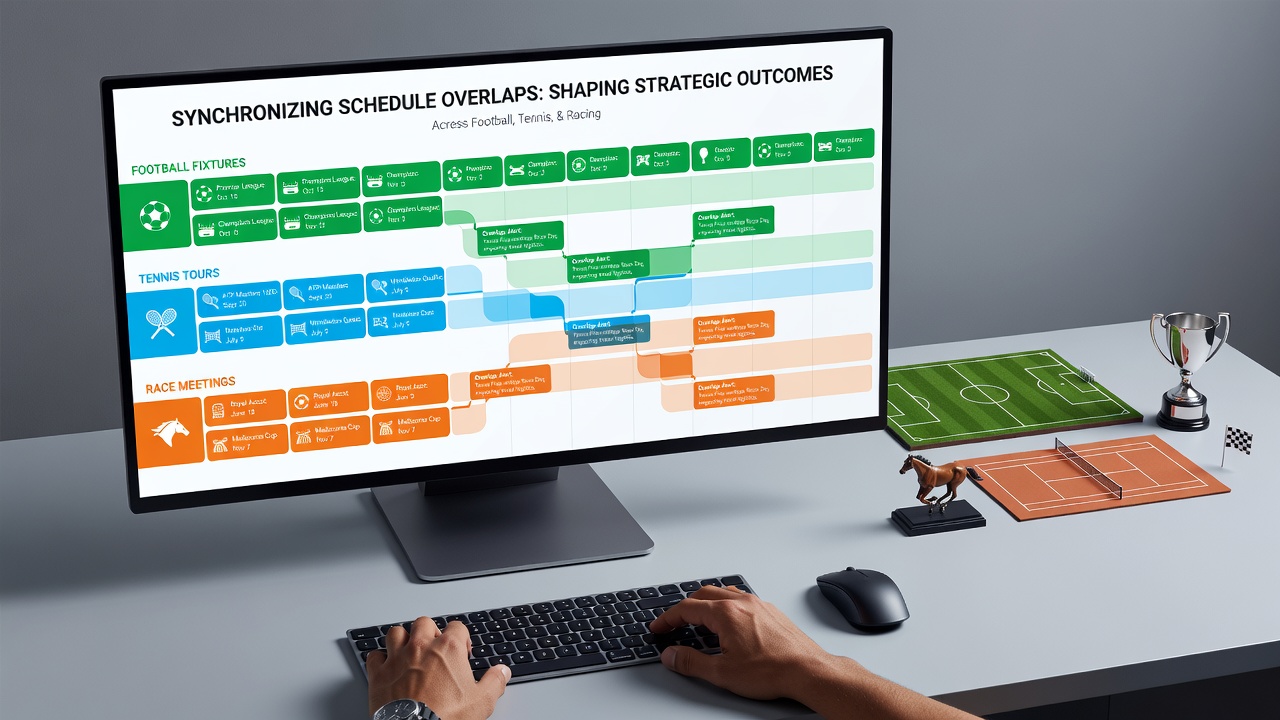
Timing precision matters because a five-minute delay in one sport can shift the entire payout sequence. Data from the Japan Racing Association shows that when a J.League match runs long due to added time, the subsequent horse race leg sometimes moves into the next settlement window, forcing operators to apply manual overrides. Bettors who build contingency buffers into their selections account for these variables by choosing markets that close before the next leg begins.
Technology and Data Feeds That Support Schedule Mapping
Modern trading desks ingest schedule APIs from the Premier League, ATP, and multiple racing jurisdictions into a single dashboard that flags potential overlaps 72 hours ahead. The system cross-references kick-off times, court-call times, and race off-times against global broadcast schedules so that traders can adjust odds in real time. A 2025 white paper from the European Gaming and Betting Association reported that operators using unified scheduling tools reduced settlement disputes by 31 percent compared with those relying on separate sport-specific feeds.
Those who study these systems note that weather delays at outdoor tennis events or racecourse inspections can compress or expand the overlap window. In such cases, conditional bet rules allow the wager to carry forward or void the affected leg, depending on the operator’s terms. The same white paper found that jurisdictions permitting carry-forward clauses recorded higher average ticket values during periods of schedule disruption.
Regulatory Considerations in Cross-Sport Betting
Regulators in several markets require operators to display the individual odds and settlement order for each leg of a multi-sport accumulator. The Nevada Gaming Control Board updated its technical standards in 2025 to mandate clear disclosure of time-zone differences and potential settlement delays. Similar requirements appear in the Isle of Man’s updated remote gaming licence conditions, which took effect in January 2026. Operators that comply with these rules report fewer customer complaints about timing mismatches.
Conclusion
Schedule synchronization across soccer, tennis, and horse racing continues to shape the structure of layered multi-bets because the underlying calendars produce recurring overlap windows that can be mapped in advance. Data from academic studies, regulatory reports, and industry associations show that precise timing, unified data feeds, and transparent settlement rules determine how these wagers are constructed and settled. As calendars evolve, the same analytical methods that identify current overlaps remain applicable to future seasons.