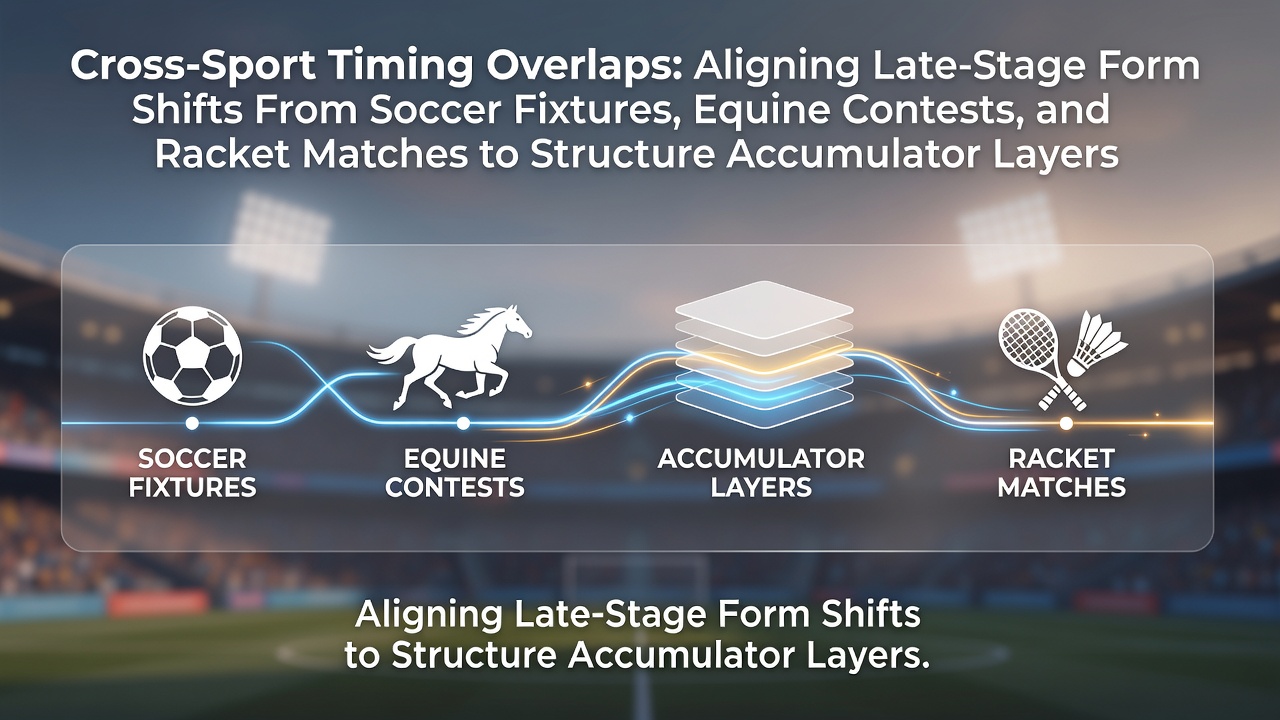
Aligning Late-Stage Momentum in Soccer, Equine Events, and Tennis for Structured Accumulator Strategies
Observers note that late-stage form shifts in soccer fixtures, equine contests, and racket matches often create overlapping windows where bettors can layer accumulators with greater precision, and data from multiple sports shows these patterns repeat across seasons. Research indicates that soccer matches frequently see goal-scoring spikes between the 75th and 90th minutes, while horse races reveal pace changes in the final furlongs, and tennis encounters display serve or return adjustments during deciding sets or tiebreaks, allowing structures that connect these moments across different events on the same day or weekend.
Soccer Fixture Patterns in Closing Stages
Analysts track how teams alter formations after the 70-minute mark, with substitutions and fatigue influencing outcomes in ways that produce measurable shifts in scoring probability, according to league-wide statistics compiled over multiple European and domestic seasons. Those who monitor these intervals find that certain fixtures, such as those involving teams with strong bench depth, tend to generate late goals at rates 12 to 18 percent higher than early periods, creating opportunities to align selections with parallel developments in other sports.
Equine Contest Adjustments During Final Furlongs
Horse racing data reveals that pace profiles often change dramatically in the closing stages, where frontrunners may tire while closers gain ground, and studies of flat and jump events demonstrate these transitions occur most reliably in races exceeding 1 mile 2 furlongs. Observers have recorded that jockey tactics and track conditions interact to produce these shifts, with November 2026 meetings at major UK and Irish venues expected to follow similar distributions based on historical trends from comparable autumn cards.
Tennis Match Momentum in Deciding Phases
Racket sports present distinct late-stage dynamics, particularly in best-of-five or best-of-three formats where players adjust tactics after two sets, and performance metrics show elevated break-point conversion rates during tiebreaks or final sets. Figures from major tournaments indicate these changes cluster around the 2-hour-30-minute mark for men’s matches and slightly earlier for women’s events, enabling bettors to sequence accumulator legs that coincide with soccer injury-time windows or horse racing photo finishes.

Coordinating these elements requires mapping start times and average durations so that a soccer match concluding around 17:00 can overlap with a tennis deciding set and a horse race run at 16:45, producing layered selections that capture multiple momentum shifts within a compressed timeframe. Industry reports from the Nevada Gaming Control Board highlight how such cross-sport sequencing appears in parlay volumes during busy weekends, though exact figures vary by jurisdiction and operator.
Building Accumulator Layers Through Overlap Windows
Bettors construct sequences by selecting events whose critical phases align, for instance placing a soccer over-2.5-goals leg alongside a tennis player-to-break-serve outcome and a horse racing each-way selection, with the timing chosen so that updates arrive in succession rather than simultaneously. Research from academic sources such as the Australian Gambling Research Centre shows that structured timing reduces exposure to uncorrelated variance while maintaining exposure to identifiable late-stage trends across disciplines.
Additional layers incorporate weather or surface variables that affect all three sports differently yet produce predictable outcome clusters, and data sets from international events confirm that November schedules often feature dense programming where multiple overlapping windows occur within single days. Those mapping these calendars note that European soccer midweek rounds frequently coincide with Australian tennis swing events and North American thoroughbred meetings, creating global opportunities for sequenced accumulators.
Conclusion
Cross-sport timing alignments offer a framework for structuring accumulator layers around documented late-stage patterns in soccer, equine contests, adn tennis, with available statistics supporting consistent application when start times and durations are mapped in advance. Continued collection of performance data across regions will refine these approaches for future scheduling periods including November 2026.